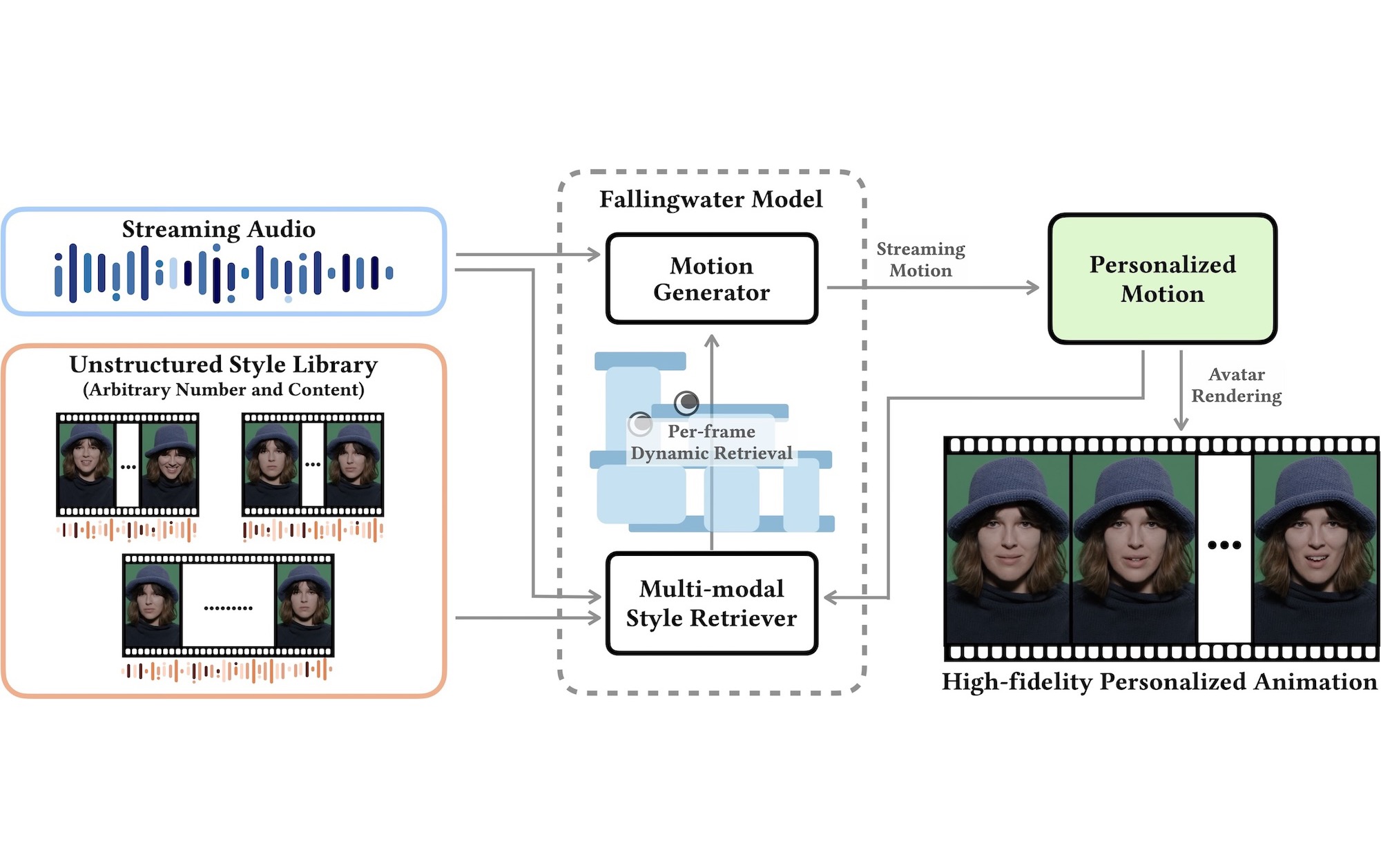
Fallingwater: Personalizing Causal Audio-Driven Facial Motion via Dynamic Multi-modal Retrieval
UniLS generates realistic, dual-track audio-driven expressions for both speakers and listeners.
I'm a research scientist at Sooth Labs.
My research focuses on building reliable forecasting models that enable agents to perform sound reasoning grounded in comprehensive and accurate context.
Previously, I received my PhD from the University of Tokyo in 2026 under the guidance of Prof. Tatsuya Harada.
Prior to that, I received my Master from Peking University, where I was advised by Prof. Yasha Wang, and I completed my Bachelor at Tongji University.
✨ [2026.07] One paper (conditionally) accepted to SIGGRAPH Asia 2026!
✨ [2026.06] Two papers accepted to ECCV 2026!
🎓 [2026.03] Officially a PhD!
📜 [2026.02] Two papers accepted to CVPR 2026!
📜 [2025.08] Starting my internship at Meta Reality Labs Pittsburgh!
📜 [2025.08] Two papers accepted to NeurIPS 2025!
📜 [2025.08] One paper accepted to SIGGRAPH Asia 2025!
📜 [2025.01] One paper accepted to CVPR 2025!
📜 [2024.09] One paper accepted to NeurIPS 2024!
📜 [2024.07] Starting my visiting studies at Princeton University!
📜 [2024.01] One paper accepted to ICLR 2024!
📜 [2023.04] Starting my PhD studies at the University of Tokyo!
📜 [2023.04] One paper accepted to ICCV 2023!
[2026.04 - Present] Research Scientist at Sooth Labs.
[2025.08 - 2026.01] Research Scientist Intern at Meta Reality Labs Pittsburgh.
[2025.05 - 2025.10] Student Researcher at Snap Research NYC (remote).
[2024.07 - 2024.09] Visiting Student Researcher at Princeton University, supervised by Prof. Jia Deng.
[2022.12 - 2023.11] Research Intern at International Digital Economy Academy (IDEA).
[2021.03 - 2022.10] Research Engineer at Tencent ARC Lab.
[2020.06 - 2021.02] Research Intern at Microsoft Research Asia.
[2019.01 - 2020.06] Research Intern at Megvii Technology, supervised by Dr. Xiangyu Zhang.










Fallingwater: Personalizing Causal Audio-Driven Facial Motion via Dynamic Multi-modal Retrieval
UniLS generates realistic, dual-track audio-driven expressions for both speakers and listeners.
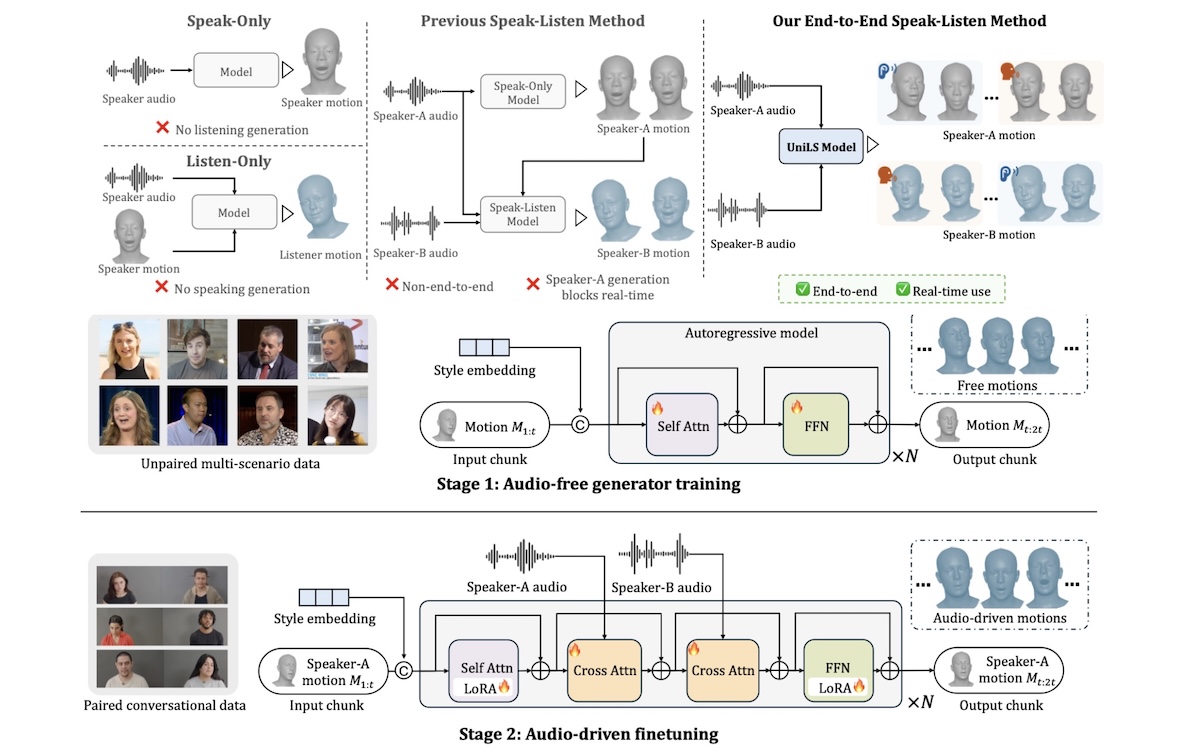
UniLS: End-to-End Audio-Driven Avatars for Unified Listening and Speaking
Paper /
Project Website /
Code

UniLS generates realistic, dual-track audio-driven expressions for both speakers and listeners.
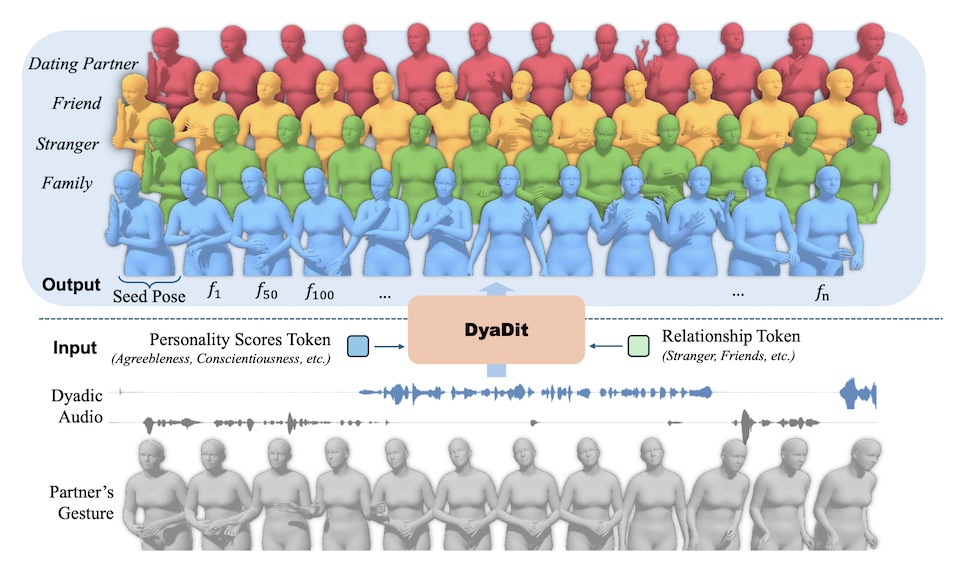
DyaDiT: A Multi-Modal Diffusion Transformer for Socially-Aware Dyadic Gesture Generation
Paper /
Project Website /
Code

DyaDiT generates digital human gestures by processing dyadic audio signals and social context, effectively capturing the mutual dynamics between two speakers.
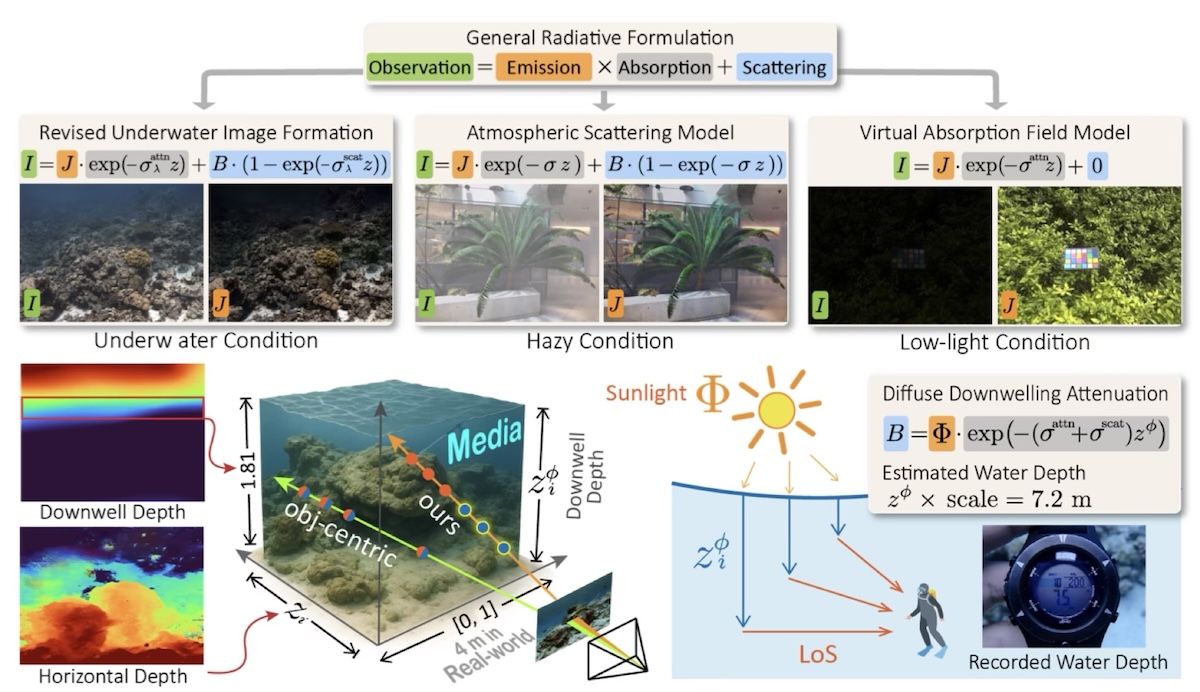
I2-NeRF: Learning Neural Radiance Fields Under Physically-Grounded Media Interactions
Paper /
Project Website /
Code

I2-NeRF is a novel neural radiance field framework that enhances isometric and isotropic metric perception under media degradation.
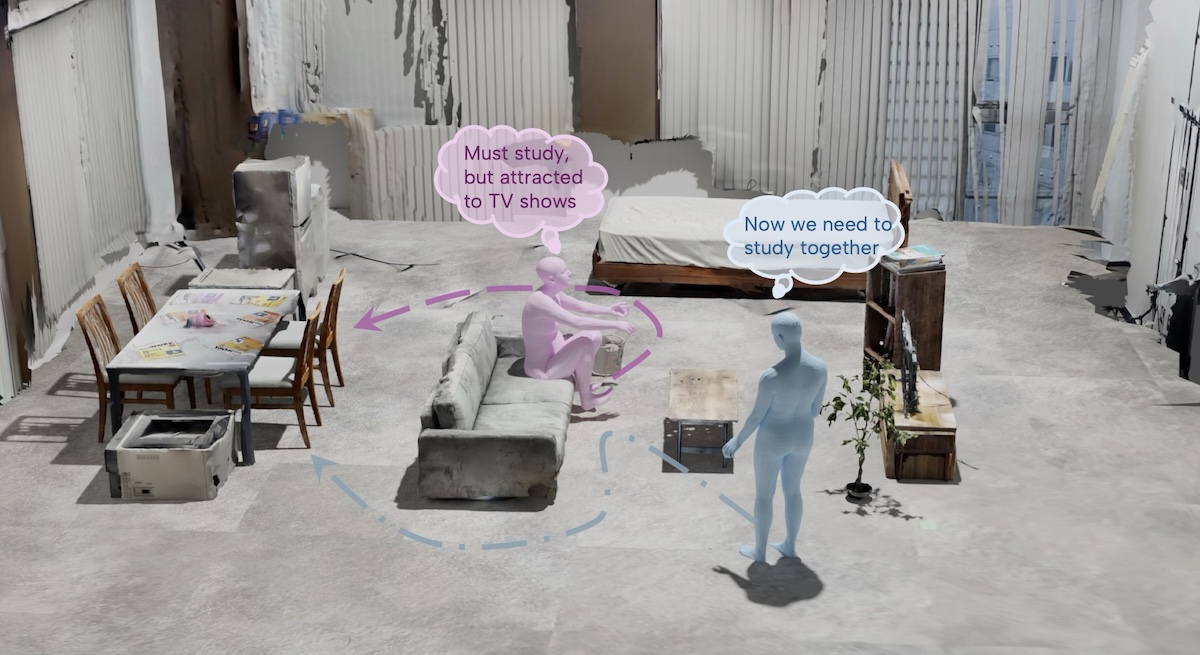
Intend to Move: A Dataset for Intention and Scene Aware Human Motion Prediction
Intend to Move is a new dataset for embodied AI, focusing on intention-aware long-term human motion in real-world environments.
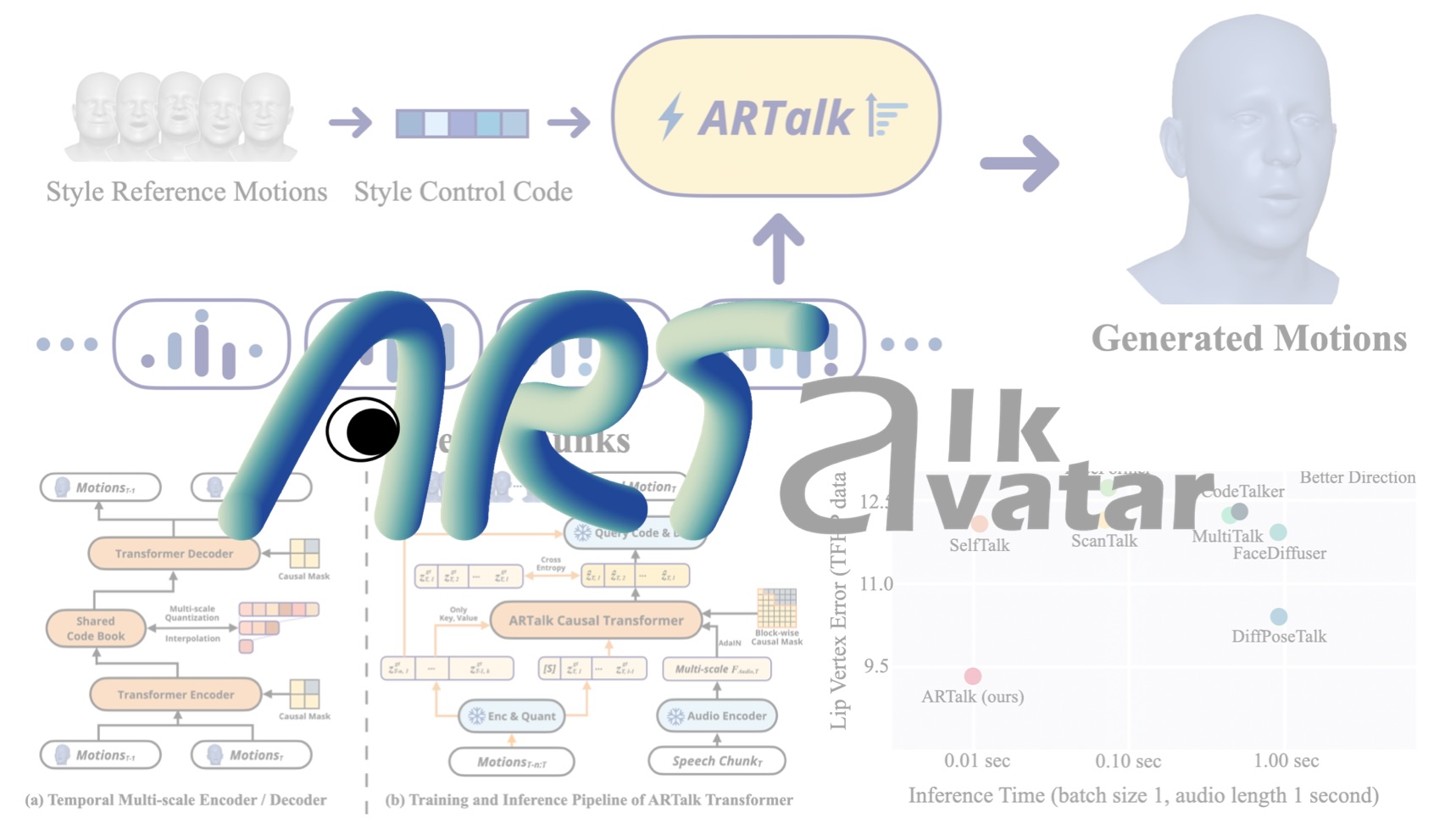
ARTalk: Speech-Driven 3D Head Animation via Autoregressive Model
Paper /
Project Website /
Code

ARTalk generates realistic 3D head motions (lip sync, blinking, expressions, head poses) from audio in real-time.
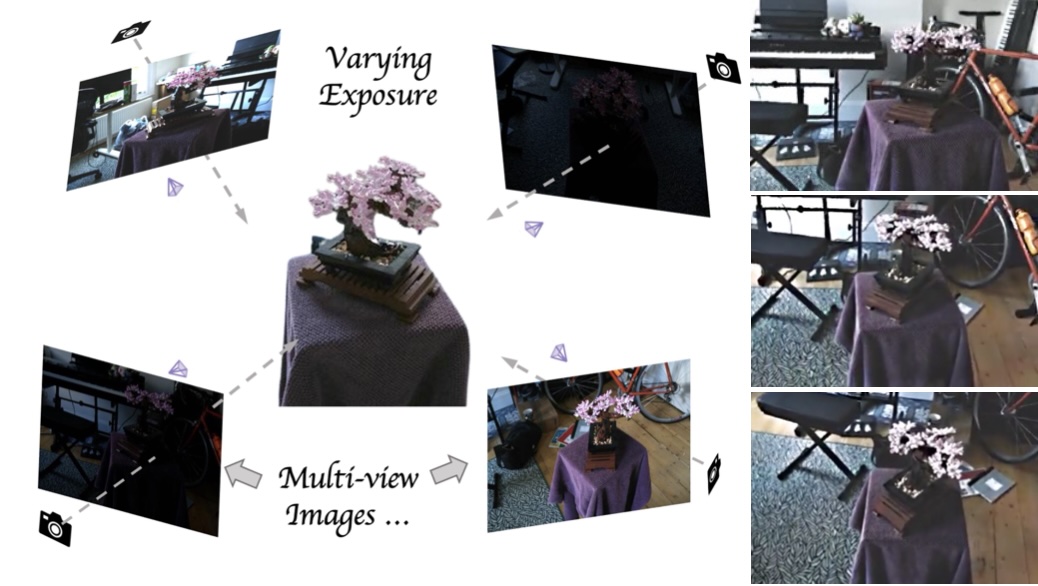
Luminance-GS: Adapting 3D Gaussian Splatting to Challenging Lighting Conditions with View-Adaptive Curve Adjustment
Paper /
Project Website /
Code

A simple multi-view curve adjustment method for novel view synthesis under challenging lighting conditions, including low-light, overexposure, and varying exposure.
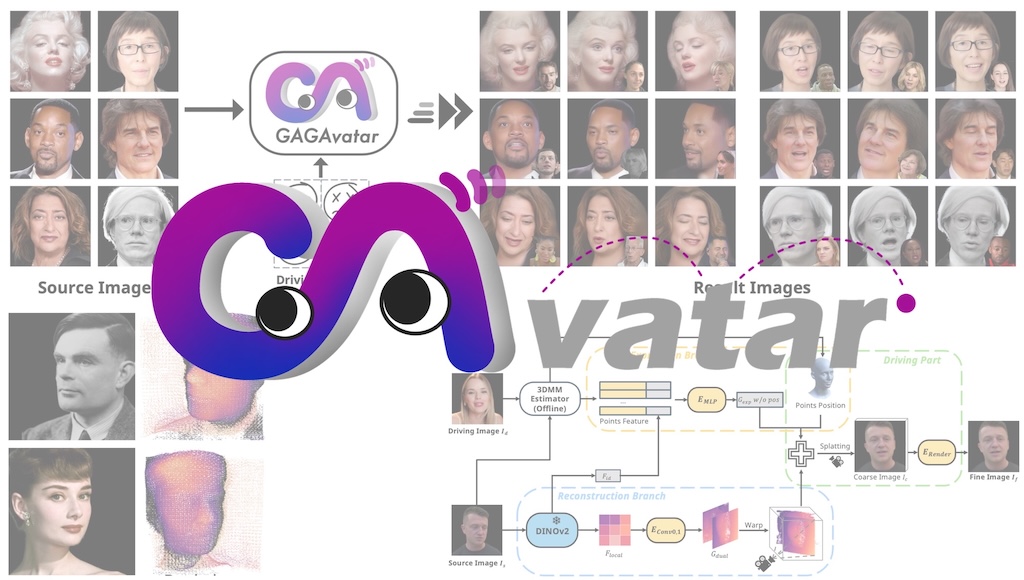
Generalizable and Animatable Gaussian Head Avatar
Paper /
Project Website /
Code


The first generalizable 3DGS framework for head avatars that can reconstruct realistic avatars from a single image and achieve real-time reenactment.
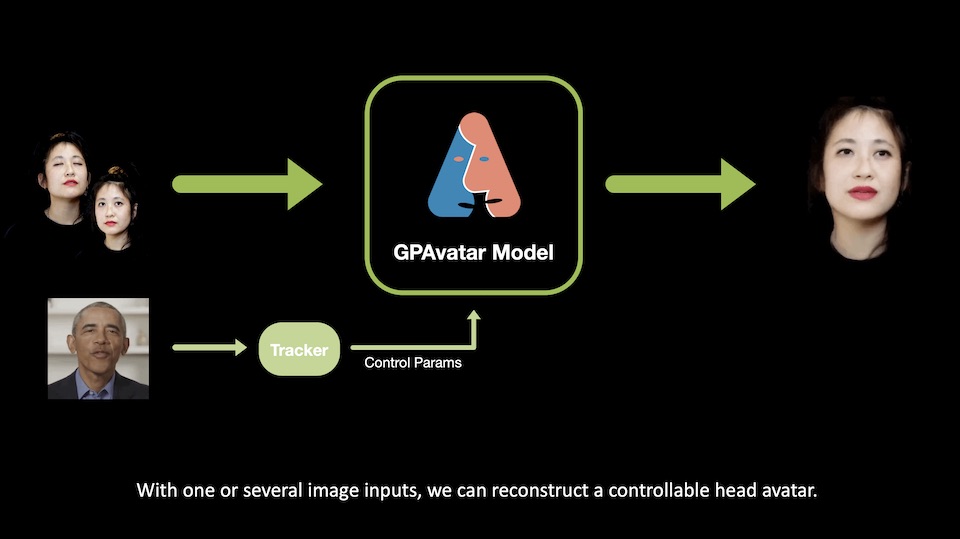
GPAvatar: Generalizable and Precise Head Avatar from Image(s)
Paper /
Project Website /
Code


A framework to reconstructs 3D head avatars from one or several images in a single forward pass.
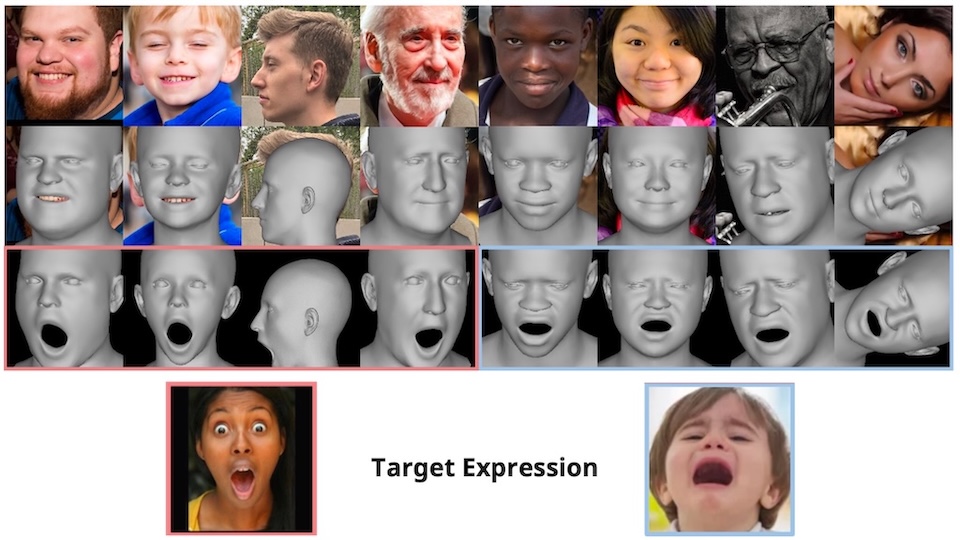
Accurate 3D Face Reconstruction with Facial Component Tokens
A framework for 3D face reconstruction from monocular images based on transformers.